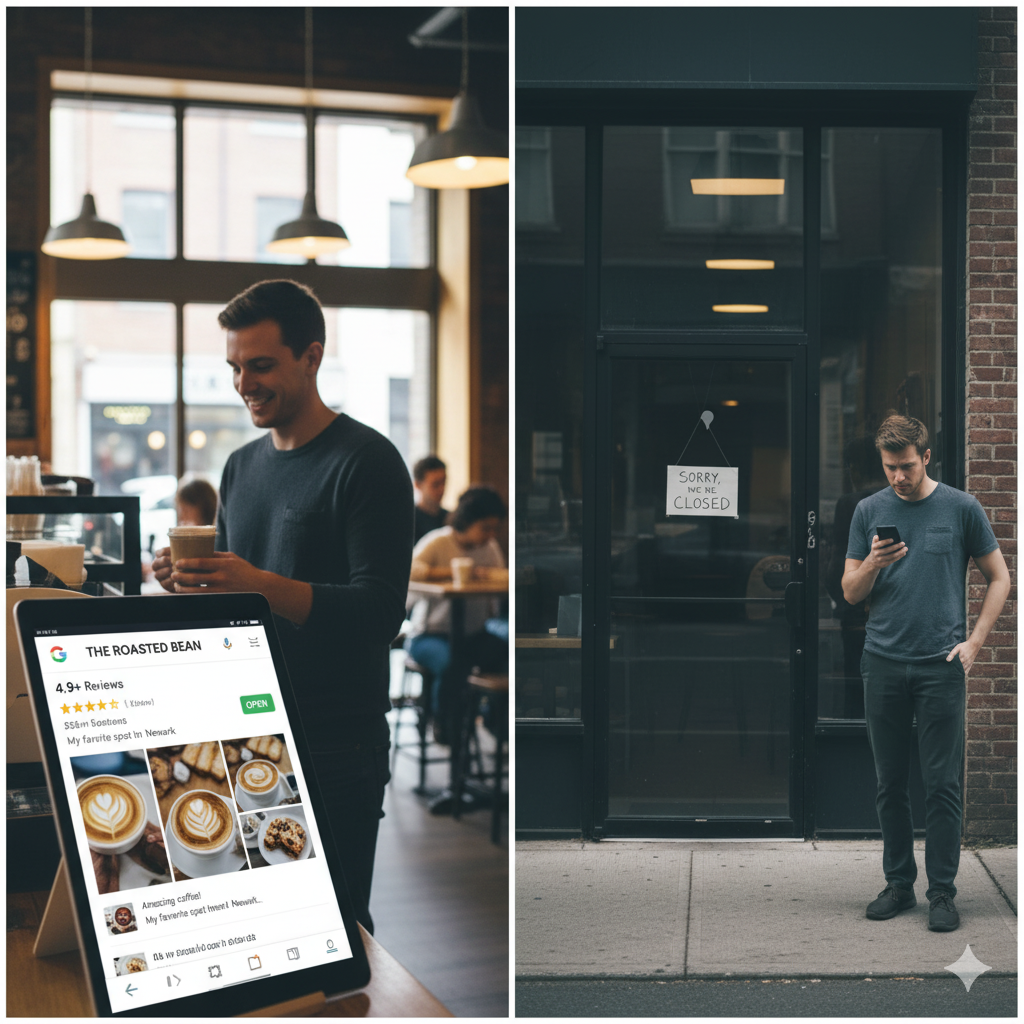

Let's be honest, you probably think you've got the Google reviews thing figured out. You ask customers for reviews, maybe even respond to a few, and call it a day. But here's the thing: in 2025, the game has completely changed, and most small business owners are still playing by 2022 rules.
I've been working with local businesses for years, and I keep seeing the same three mistakes over and over again. These aren't the obvious ones like "not asking for reviews" these are the sneaky mistakes that are quietly destroying your local rankings while you think everything's fine.
Mistake #1: You're Asking for Reviews at the Wrong Time (And Everyone's Doing This)
Here's what most businesses do: They wait until the transaction is completely over, then send a generic "please leave us a review" email a week later. Sound familiar?
This approach is killing your review quality, and here's why nobody talks about this, timing isn't just about when you ask, it's about the customer's emotional state when they receive your request.
When you wait a week, your customer has already moved on mentally. They're dealing with new problems, thinking about other things, and your awesome service is just a fading memory. The result? Generic reviews like "Great service, thanks!" that don't help your rankings at all.
The Fix That Actually Works:
Ask for reviews within 24-48 hours, but here's the key part, do it right after they've experienced a small win or positive moment with your business.
For a restaurant, that might be right after they post a photo of their meal on Instagram. For a contractor, it's right after they text you saying how happy they are with the work. For a retail store, it's when they use your product for the first time successfully.
Pro tip: Set up Google alerts for your business name + positive words. When customers mention you positively online, that's your golden moment to ask for a review.

Mistake #2: You're Responding Like a Robot (And Google Can Tell)
I see this everywhere: Businesses respond to every review with basically the same template. "Thank you so much for the 5-star review! We appreciate your business and look forward to serving you again!"
Google's AI has gotten scary good at detecting generic responses. When you use the same template over and over, you're actually signaling to Google that you're not genuinely engaged with your customers. This hurts your local rankings more than you realize.
But here's the part that really gets me – most business owners don't realize that their review responses are being read by potential customers more than the actual reviews.
The Fix That Makes a Real Difference:
Make your responses specific to each review. Reference something the customer actually said. If they mentioned your "friendly staff," don't just say thanks – mention a specific team member or explain what makes your staff different.
Here's a template that actually works:
Instead of: "Thanks for the great review!"
Try: "Hi [Name], I'm so glad Maria was able to help you find exactly what you were looking for yesterday. She mentioned you were working on a big project – hope everything turned out amazing!"
But here's the advanced move: Use your responses to naturally include keywords that potential customers search for. If you're a pizza place and someone mentions your "crispy crust," respond with something like "We're thrilled our wood-fired pizza hit the spot! Our stone oven really makes the crust special."

Mistake #3: You're Ignoring the "Review Neighborhood Effect"
This is the mistake that absolutely no generic AI would catch, because it requires understanding how real local businesses actually work.
Most businesses focus only on their own Google Business Profile reviews. But Google doesn't just look at your reviews in isolation it looks at the entire "review neighborhood" around your business.
If you're a restaurant and every other restaurant in your area has 200+ reviews while you have 23, Google sees you as less established, even if your star rating is higher. If you're in a shopping center and other businesses there are getting consistent fresh reviews while yours are months old, it affects your rankings.
The Real Problem: You're not thinking about reviews as part of your local ecosystem. You're thinking about them as individual ratings, but Google sees them as social proof within your specific market context.
The Fix That Small Businesses Miss:
First, research your direct competitors' review patterns. How often do they get reviews? What's their average length? What keywords do customers use when reviewing businesses like yours?
Then, adjust your review strategy to match or exceed the "neighborhood standard." If competitors are getting 8-10 reviews per month, you need to aim for 10-12. If their reviews average 150 words, yours should average 160+.
Advanced strategy: Partner with other businesses in your area for cross-referrals, but make sure you're both actively generating reviews. A strong "review neighborhood" helps everyone's local SEO.

Planning for 2026: What's Coming That Most Businesses Aren't Ready For
The landscape is changing fast, and here's what I'm seeing that most small business owners need to start preparing for now:
AI Review Authenticity Detection
Google's getting better at detecting fake or manipulated reviews, but they're also getting better at detecting businesses that are trying to "game" the system. The businesses that will win in 2026 are the ones focusing on genuine customer experience rather than review manipulation.
Start now: Focus on creating remarkable customer experiences that naturally lead to detailed, specific reviews. Document your customer journey and identify all the moments where you could be doing something more memorable.
Voice and Video Review Integration
Reviews are becoming multimedia. By 2026, businesses with video testimonials and voice reviews embedded in their Google Business Profiles will have significant advantages.
Start now: Begin asking satisfied customers if they'd be willing to record a quick 30-second video testimonial. Most people are more comfortable with video than you'd think, especially if you make it easy.

Hyper-Local Context Ranking
Google is getting better at understanding local context and community connections. Reviews that mention specific local landmarks, events, or community connections will carry more weight.
Start now: Encourage customers to be specific about the local aspects of their experience. Instead of "convenient location," you want reviews that say "right next to the farmers market" or "easy to find after the school pickup."
Review Response Intelligence
By 2026, Google will be analyzing the intelligence and helpfulness of your review responses as a ranking factor. Generic responses will actively hurt you.
Start now: Treat every review response as a mini-blog post. Be helpful, specific, and add value for future customers reading the response.

The Reality Check Most Business Owners Need
Here's the truth: Reviews aren't just about getting stars on your Google Business Profile anymore. They're about demonstrating ongoing customer relationships, community engagement, and business authenticity.
The businesses winning with reviews in 2025 understand that every review and every response is an opportunity to show Google (and potential customers) that they're active, engaged, and genuinely connected to their community.
Stop thinking about reviews as something you ask for when you remember to. Start thinking about them as the ongoing conversation you have with your community about the value you provide.
The three mistakes I've outlined here are costing you more than just rankings – they're costing you the opportunity to build real relationships with your customers and your community. Fix these now, plan for the changes coming in 2026, and you'll be amazed at how much your local search presence improves.
Your competitors are still sending those generic "please review us" emails and responding with robot templates. While they're stuck in 2022, you can be building the review strategy that will dominate local search for years to come.